Self-Determination Theory
The most extensively researched motivational framework in education, applied directly to the music classroom. Understand the three basic psychological needs, and how to design teaching and tools that genuinely support them.
- Self-Determination Theory (SDT) is one of the most extensively researched frameworks in motivational psychology.
- SDT distinguishes four motivation types: intrinsic (inherently satisfying), identified (personally meaningful), introjected (guilt-driven), and external (reward/punishment). Only the first two reliably sustain long-term engagement.
- Its central claim is both simple and profound: human beings have three universal psychological needs: competence, autonomy, and relatedness. When these needs are met, intrinsic motivation and well-being flourish. When they're thwarted, motivation declines and problems follow.
- Competence support requires timely, specific, personalized feedback, not just praise. Students must be able to perceive their own growth, not just be told they're doing well.
- Autonomy support means genuine agency, not just the illusion of choice. Well-intentioned controls (mandatory practice logs, grade-enforcement, nagging) reliably reduce intrinsic motivation, even when compliance increases.
- Relatedness support means making each student feel individually seen instead of being treated as just a member of a section. Students who feel their teacher notices them personally are dramatically more likely to stay engaged.
- Controlling behaviors backfire even when the intent is positive. The mechanism: when students attribute practice to external pressure, they lose ownership and motivation with it.
- Blini is designed to operationalize all three needs: practice analytics build competence, screen-free student control supports autonomy, teacher visibility enables relatedness.
Articles in this section
Deep dives into the research and practical strategies.
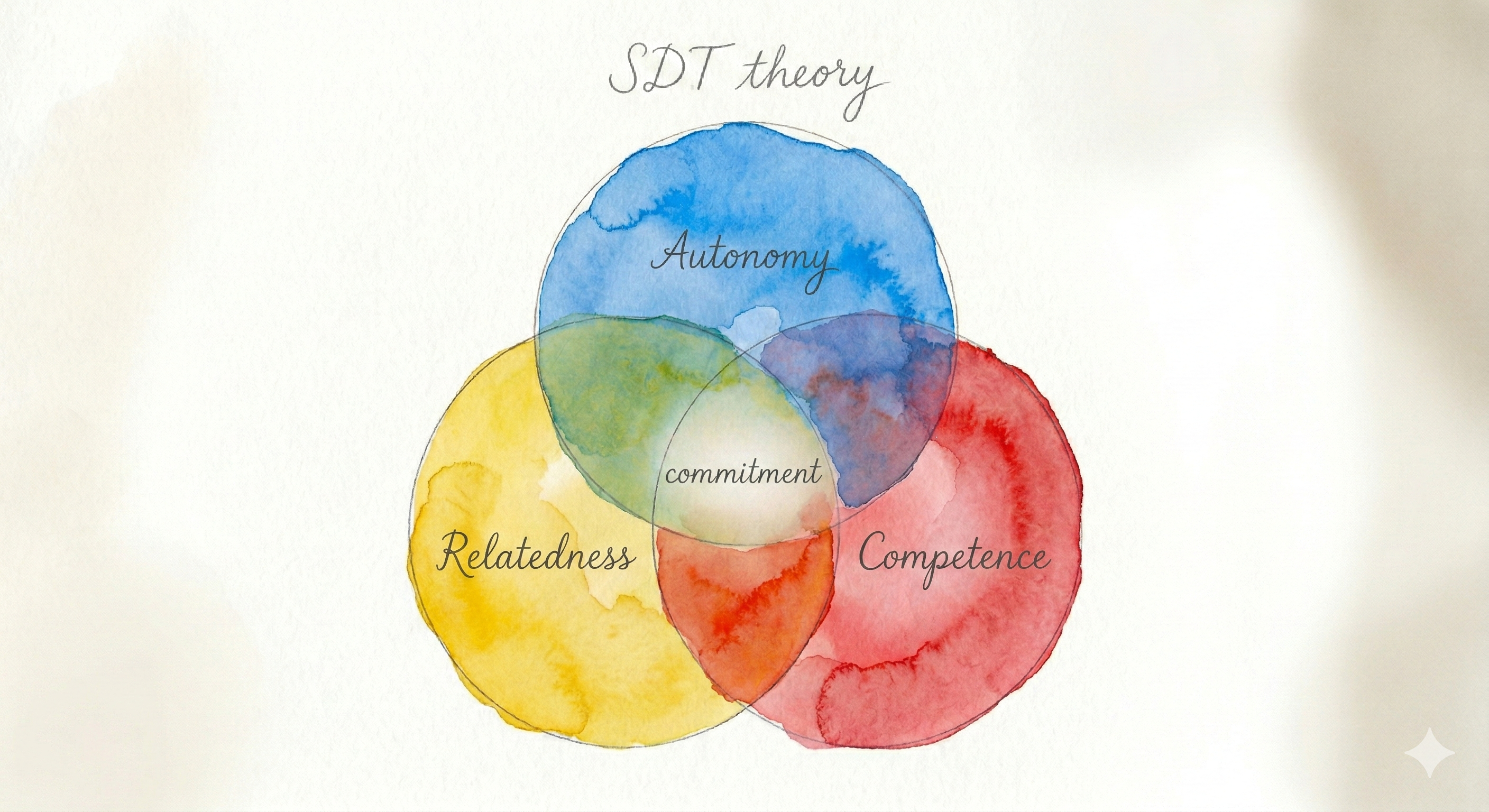
Self-Determination Theory for music educators: a practical primer
Deci and Ryan's SDT is the most robust motivational framework in education research. This guide covers the three basic psychological needs, the motivation spectrum, and direct classroom applications for music educators.

Self-determination theory and student motivation: what Deci and Ryan's research means for music teachers
Based on Deci & Ryan (2000). How competence, autonomy, and relatedness drive lasting student motivation. The article covers what it means for practice tracking, feedback, and retention in band and orchestra programs.
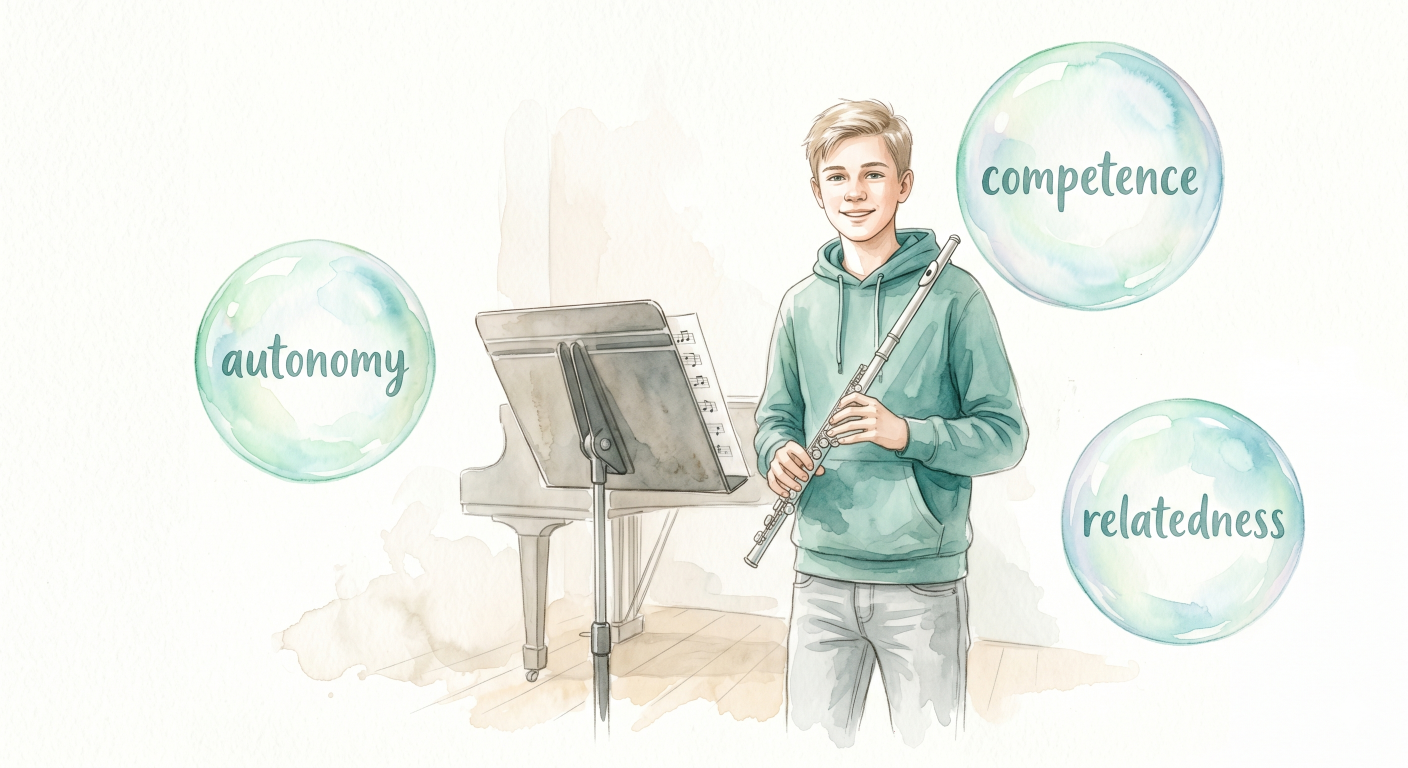
Self-determination theory: a unified approach to motivation in music education
Based on Evans (2015). How SDT unifies fragmented research on music motivation, and what competence, relatedness, and autonomy look like inside a real band room.
Coming soon
More articles being added to this section.
SDT in practice: see it with eBlini.
Blini's design is grounded in all three basic psychological needs. Try it yourself.